Mar 5, 2026
•
3 min
read
The Structural Role of Video in Modern Publishing
Sektörel Öngörüler


.svg)

As CEO of Membrana Media, I attended Mega-Conference from March 30 to April 1 alongside Siebren Roorda, our Managing Director for North America & Western Europe – a defining annual gathering for local media and publishers in the U.S. This is where the industry drops the abstractions and confronts the challenges shaping its future head-on.
%20(1).webp)
Conferences like this have a rhythm of their own: morning coffee, quick introductions in hallways, badges glanced at in passing, conversations that begin with polite small talk and, within minutes, turn into something much more urgent: how to retain audiences, how not to lose subscribers, how not to disappear in the new attention economy.
For the Membrana team, this trip to Austin mattered for more than market presence. It was a chance to feel, firsthand, what defines American local publishing today: which themes dominate the room, what publishers expect from new solutions, and where the line now sits between caution and readiness to change.
Mega-Conference set an honest tone from the start. There were very few futuristic slogans or sweeping promises about “the future of media.” Instead, the conversations were grounded: how publishers are driving revenue today, how they are deploying AI, how they are rethinking product, and how they are trying not to lose touch with their readers.
The central tension in nearly every discussion was unmistakable: the market is tired of one-size-fits-all answers. American local publishers are no longer looking for a magic fix. They are looking for a working system: one that can connect subscriptions, advertising, user registration, and a sensible user experience.
That is why first-party data came up so often. For local publishers today, an email address is no longer just a contact point; it is a real asset, the beginning of a funnel where habit can become loyalty, and loyalty can eventually become a subscription.
For the Membrana team, this was a moment of recognition. Their own approach, seeing attention as an intermediate layer between a paywall and abandonment, felt unexpectedly aligned with where the market is heading.
Not as “just another ad format,” but as a way not to lose users who are not ready to pay yet, but are willing to stay if the path in feels softer.
In hallway conversations, this logic often sounded even more convincing than it did on stage.
None of it felt like trend-chasing. It felt like a serious attempt to solve the same old problem in a better way: how not to force users into an overly rigid choice between paying and leaving.
%20(1).webp)
Against that backdrop, conversations about AI were surprisingly grounded. Not hype, but infrastructure: how to integrate it into editorial workflows, how to use it in product, how not to give away too much value to platforms already learning from publishers’ content.
And one more thing became clear: decisions about new tools are increasingly being made not by editorial teams, but by product teams. That changes the nature of the conversation.
Today, publishers do not just want to hear how a technology works: they want to understand what it will do for retention, registration, conversion, and revenue.
But as is often the case, the clearest insights about the market did not come from the stage.
Sometimes they came by the coffee machine. Sometimes, while waiting in line for a badge. And sometimes, unexpectedly, next to a booth with small yellow ducks.
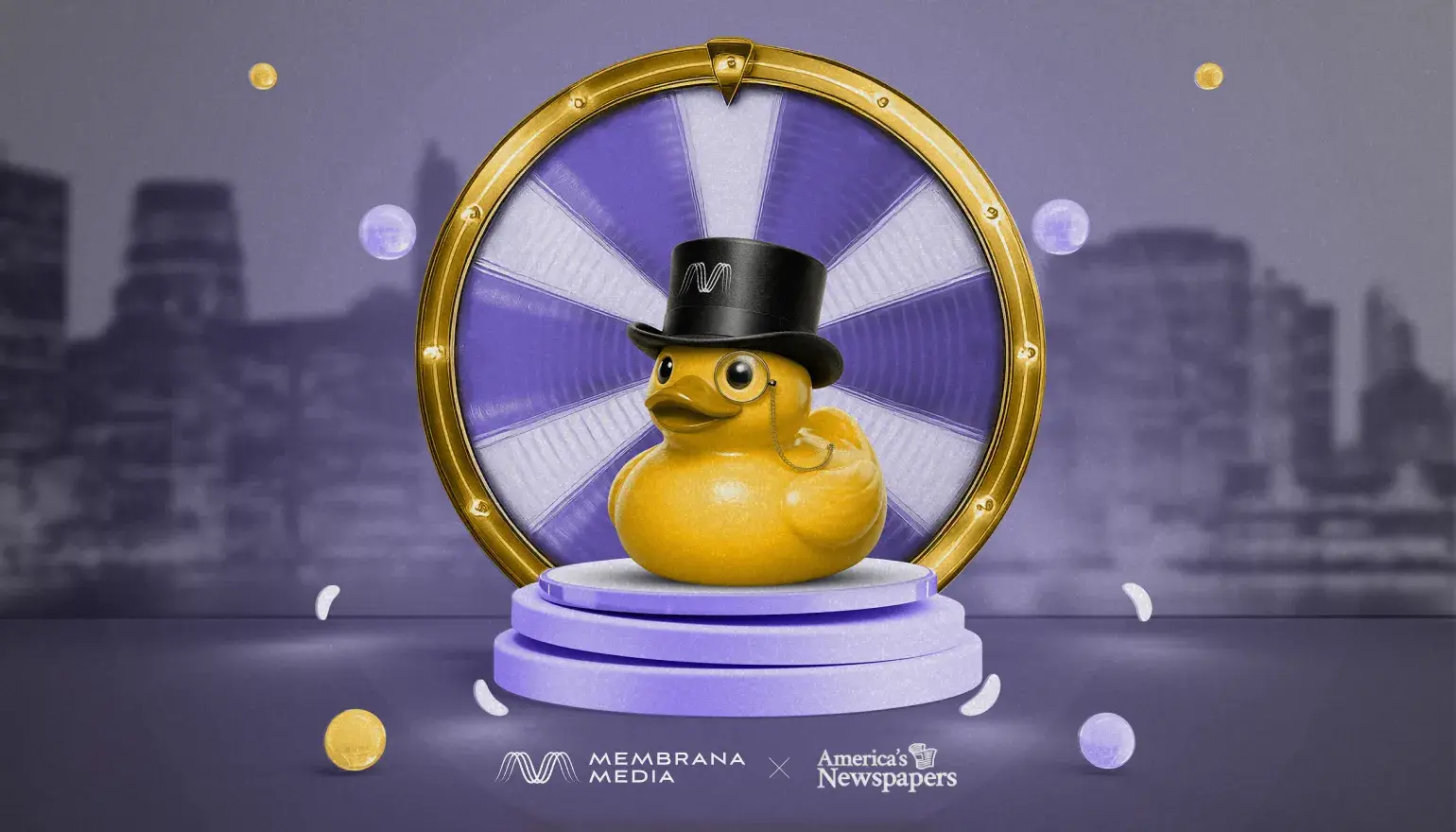
Membrana’s yellow ducks turned out to be exactly the kind of detail that breaks the ice faster than any prepared pitch. They caught people’s attention, made them smile, and created something surprisingly rare at B2B conferences: a reason to start a conversation without slipping into a role.
%20(1).webp)
Nearby, there was also a headphone raffle for publishers, a simple but lively idea. People stopped by, laughed, asked about the ducks, chatted about the raffle, and the conversation began almost on its own.
And then came what really mattered: the exchange of experience, honest conversations about how different publishers structure their paywalls, where subscription strategies have failed, how audiences are responding to new formats, and what publishers are actually looking for from technology partners.
Mega-Conference was a reminder of something simple: even in B2B, where everyone talks about funnels, performance, and ROI, the strongest relationships still begin with human contact.
Not only with the perfect sales deck or a polished elevator pitch. But with a real conversation — the kind where trust starts to form.
And in the end, that may have been the most valuable outcome of the trip for Membrana: not just new contacts, but a sharper sense of the market itself — its pace, its tone, and where the real opportunities for growth lie.
Because in an industry changing this quickly, the most valuable things are still the oldest ones: attention, trust, and the willingness to truly listen.